



Histamine Receptor
Histamine Receptors are a class of G protein-coupled receptors with histamine as their endogenous ligand. There are four known histamine receptors: H1 receptor, H2 receptor, H3 receptor, H4 receptor. The H1 receptor is a histamine receptor belonging to the family of Rhodopsin-like G-protein-coupled receptors. This receptor, which is activated by the biogenic amine histamine, is expressed throughout the body, to be specific, in smooth muscles, on vascular endothelial cells, in the heart, and in the central nervous system. H2 receptors are positively coupled to adenylate cyclase via Gs. It is a potent stimulant of cAMP production, which leads to activation of Protein Kinase A. Histamine H3 receptors are expressed in the central nervous system and to a lesser extent the peripheral nervous system, where they act asautoreceptors in presynaptic histaminergic neurons, and also control histamine turnover by feedback inhibition of histamine synthesis and release. The Histamine H4 receptor has been shown to be involved in mediating eosinophil shape change and mast cell chemotaxis.
Histamine Receptor Isoform Specific Products
All Product Categories
-
Histamine Receptor Inhibitors
(199)
View all products
-
Histamine Receptor Agonists
(66)
View all products
-
Histamine Receptor Antagonists
(497)
View all products
-
Histamine Receptor Activators
(5)
View all products
-
Histamine Receptor Modulators
(20)
View all products
-
Histamine Receptor Controls
(9)
View all products
-
Histamine Receptor Ligands
(5)
View all products
-
Histamine Receptor Related Products (880)
Related Products (880)

-
Antibodies (2)
-
Histamine Receptor Isoform Comparison
-
GR-175737
 0 ImagesCat. No.: HY-123447CAS No.: 176860-26-7GR 175737 is a partial histamine H3 receptor agonist, with an EC50 of 7.8 nM. GR 175737 can be used in the research of inflammatory diseases.
-
Lafutidine (Standard)
 0 ImagesSynonyms: FRG-8813 (Standard)Lafutidine (Standard) is the analytical standard of Lafutidine. This product is intended for research and analytical applications. Lafutidine (FRG-8813) is a histamine H2-receptor antagonist (H2RA), with proven gastric mucosal protective effects. Lafutidine can be used for the research of gastroesophageal reflux disease.
-
Latrepirdine dihydrochloride (Standard)
 0 ImagesSynonyms: Dimebolin dihydrochloride (Standard)Latrepirdine (dihydrochloride) (Standard) is the analytical standard of Latrepirdine (dihydrochloride). This product is intended for research and analytical applications. Latrepirdine dihydrochloride is a neuroactive compound with antagonist activity at histaminergic, α-adrenergic, and serotonergic receptors. Latrepirdine stimulates amyloid precursor protein (APP) catabolism and amyloid-β (Aβ) secretion.
-
Antazoline (Standard)
 0 ImagesCat. No.: HY-B1067ARCAS No.: 91-75-8Synonyms: Phenazoline (Standard)Antazoline (Phenazoline) (Standard) is the analytical standard of Antazoline. This product is intended for research and analytical applications. Antazoline is a histamine H1 receptor antagonist with anticholinergic and antiviral properties. Antazoline can prevent histamine from acting on target cells through a reversible competition effect on histamine receptor sites of these cells. Antazoline can exert an antiallegic effect and prevent the occurrence of physiological reactions from the effect of blocking as well as inhibiting H1 receptor. Antazoline can effectively reduce HBV DNA in the extracellular supernatant in a dose-dependent manner, with EC50 of 2.910 μmol/L in HepAD38 cells. Antazoline also has a significant inhibitory effect on HBV DNA in the extracellular supernatant of Huh7 cells (EC50 = 2.349 μmol/L). Antazoline has anti-arrhythmic effect in acute myocardial infarctions. Antazoline can be studied in research for cardiovascular diseases, and HBV.
-
Mepyramine maleate (Standard)
 0 ImagesMepyramine maleate (Standard) (Pyrilamine maleate (Standard)) is the analytical standard of Mepyramine maleate (HY-B1281). This product is intended for research and analytical applications. Mepyramine maleate (Pyrilamine maleate) is a selective histamine H1 receptor antagonist and KCNQ channel inhibitor, with an IC50 of 12.5 μM against KCNQ2/Q3. Mepyramine maleate shows no activity against allergic asthma in mice when used alone, but modulates the effect of JNJ 7777120 (HY-13508) on allergic asthma in mice; it inhibits the development of morphine physical dependence and increases histamine levels in mouse brains. Mepyramine maleate can be used in studies related to seizures, convulsions, allergic asthma and morphine physical dependence.
-
Zotepine (Standard)
 0 ImagesZotepine (Standard) is the analytical standard of Zotepine. This product is intended for research and analytical applications. Zotepine, an antipsychotic agent, is a potent antagonist of 5-HT2A, 5-HT2C, Histamine H1, α1-adrenergic and Dopamine D2 receptors, with Kds of 2.6 nM, 3.2 nM, 3.3 nM, 7.3 nM and 8 nM, respectively. Zotepine exhibits antidepressive and anxiolytic effects in vivo.
-
Bavisant dihydrochloride
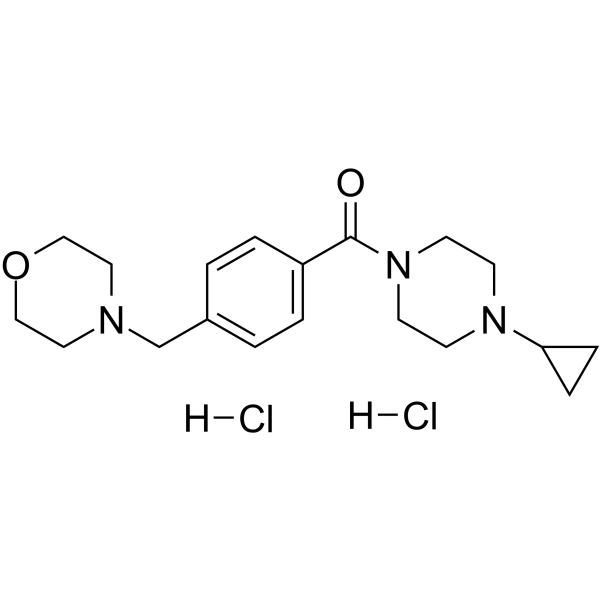 0 ImagesCat. No.: HY-14880ACAS No.: 929622-09-3Synonyms: JNJ-31001074 dihydrochlorideBavisant (JNJ-31001074) dihydrochloride is an orally active, potent, brain-penetrating and highly selective antagonist of the histamine H3 receptor. Bavisant dihydrochloride can be used for attention-deficit hyperactivity disorder (ADHD) research.
-
Thiethylperazine dimaleate (Standard)
 0 ImagesThiethylperazine (dimaleate) (Standard) is the analytical standard of Thiethylperazine (dimaleate). This product is intended for research and analytical applications. Thiethylperazine dimaleate, a phenothiazine derivate, is an orally active and potent dopamine D2-receptor and histamine H1-receptor antagonist. Thiethylperazine dimaleate is also a selective ABCC1activator that reduces amyloid-β (Aβ) load in mice. Thiethylperazine dimaleate has anti-emetic, antipsychotic and antimicrobial effects.
-
A-940894
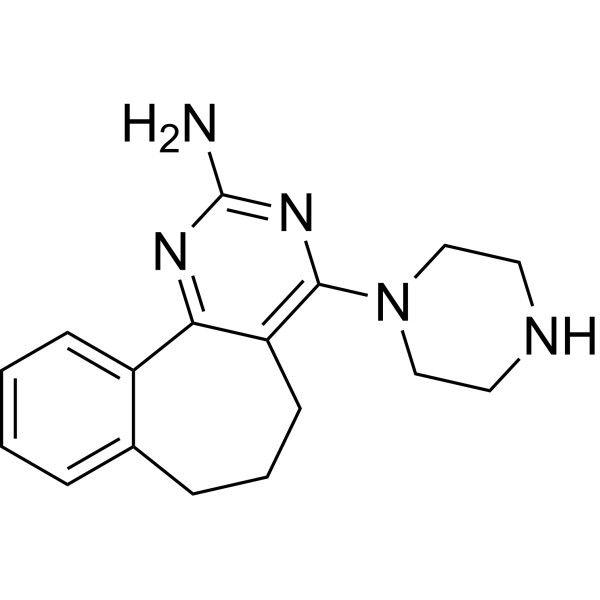 0 ImagesCat. No.: HY-113669CAS No.: 1027330-82-0A-940894 is a potent histamine H4 receptor antagonist, with Ki values of 7.6 nM (rat H4) and 71 nM (human H4). A-940894 exhibits with anti-inflammatory properties.
-
Arbortristoside A
 0 ImagesCat. No.: HY-127080CAS No.: 97145-52-3Arbortristoside A is an orally active inhibitor of prostaglandin (prostaglandin), histamine (histamine) and serotonin (serotonin). Arbortristoside A mediates anti-inflammatory, analgesic, anti-allergic, immunomodulatory, antiviral and anti-ulcerogenic effects, and also exhibits in vitro anticancer activity. Arbortristoside A can be used in research related to human hepatocellular carcinoma, breast cancer, fibrosarcoma, leishmaniasis, allergic diseases, viral infections and gastric ulcers.
-
Alcaftadine (Standard)
 0 ImagesCat. No.: HY-17039RCAS No.: 147084-10-4Synonyms: R89674 (Standard)Alcaftadine (Standard) is the analytical standard of Alcaftadine. This product is intended for research and analytical applications. Alcaftadine (R89674) is a histamine H1 receptor antagonist, which is used to prevent eye irritation brought on by allergic conjunctivitis. Alcaftadine is a broad-spectrum antihistamine displaying a high affinity for histamine H1 and H2 receptors and a lower affinity for H4 receptors. Alcaftadine also exhibits modulatory action on immune cell recruitment and mast cell stabilizing effects.
-
MK-785
 0 ImagesCat. No.: HY-121625CAS No.: 16662-56-9MK-785 is a histidine decarboxylase inhibitor. MK-785 interacts with the cofactor Pyridoxal phosphate (HY-B1744). MK-785 reduces basal and gastrin-stimulated gastric acid secretion. MK-785 decreases the formation of stress ulcers induced by cold stress and restraint stress. MK-785 inhibits gastric histidine decarboxylase activity in brown rats. MK-785 can be used in studies related to stress ulcers.
-
(R)-Azelastine
 0 ImagesCat. No.: HY-Z12728CAS No.: 143228-84-6(R)-Azelastine is an antihistamine compound with antiallergic activity. (R)-Azelastine can downregulate the levels of H1R, M1R, and M3R. (R)-Azelastine has also been shown to inhibit the proliferation of HNEpC.
-
Arpromidine
 0 ImagesCat. No.: HY-164430CAS No.: 106669-71-0Synonyms: BU-E-50Arpromidine (BU-E-50) is the agonist for histamine H2 receptor and the antagonist for histamine H1 receptor. Arpromidine exhibits positive inotropic effect with less risks in causing arrhythmias. Arpromidine can be used in research of congestive heart failure.
-
Choline theophyllinate (Standard)
 0 ImagesCholine theophyllinate (Standard) (Oxtriphylline (Standard)) is the analytical standard of Choline theophyllinate (HY-B1718). This product is intended for research and analytical applications. Choline theophyllinate (Oxtriphylline) is an orally active methylxanthine derivative. Choline theophyllinate exhibits weak antihistaminic and anticholinergic activities and potentiates the effects of histamine and acetylcholine. Choline theophyllinate relaxes bronchial smooth muscle, dilates coronary and peripheral blood vessels, increases urine output and electrolyte excretion, stimulates locomotor activity in the central nervous system, and induces transient hypotension following a pressor phase. It modulates sleep architecture by increasing wakefulness time and reducing slow-wave sleep, without altering the frequency or severity of nocturnal hypoxemia, apnea, or hypopnea events. Choline theophyllinate is used in studies of bronchospasm, nocturnal asthma, and chronic asthma.
-
AHR-1911
 0 ImagesSynonyms: 10-Undecen-1-yl-thiopseudourea iodideAHR-1911 (10-Undecen-1-yl-Thiopseudourea Iodide;Isothiuronium) is a thiourea-based anti-inflammatory and anti-tumor agent that has an improving effect on burned skin. AHR-1911 produces histamine-like effects when injected intradermally and may reduce arterial pressure in anesthetized dogs. AHR-1911 inhibits tumor growth and reduces microsomal and C-polysome protein synthesis.
-
H4R antagonist 1 (Standard)
 0 ImagesCat. No.: HY-111501RCAS No.: 1429375-54-1H4R antagonist 1 (Standard) is the analytical standard of H4R antagonist 1 (HY-111501). This product is intended for research and analytical applications. H4R antagonist 1 is a potent and highly selective histamine H4 receptor (H4R) antagonist with an IC50 of 27 nM. H4R antagonist 1 does not show any noticeable binding affinity to other subtypes of histamine receptors, H1R, H2R, and H3R.
-
Nedocromil (Standard)
 0 ImagesSynonyms: FPL 59002 (Standard)Nedocromil (Standard) is the analytical standard of Nedocromil. This product is intended for research and analytical applications. Nedocromil suppresses the action or formation of multiple mediators, including histamine, leukotriene C4 (LTC4), and prostaglandin D2 (PGD2).
-
Famotidine hydrochloride
 0 ImagesCat. No.: HY-B0377ACAS No.: 125193-62-6Synonyms: MK-208 hydrochlorideFamotidine hydrochloride (MK-208 hydrochloride) is an orally active and highly selective histamine H2 receptor antagonist. It inhibits gastric acid secretion by blocking the Gs signaling pathway, and regulates intracellular cAMP and ERK pathways. Famotidine hydrochloride inhibits TLR3-mediated inflammatory pathways, and reduces the expression of various inflammatory mediators and interferon-related genes. Famotidine hydrochloride scavenges DPPH and nitric oxide free radicals, alleviates oxidative stress damage in gastric tissue, inhibits proMMP-9, improves vascular endothelial permeability, and restores the normal physiological functions of neutrophils and eosinophils. Famotidine hydrochloride crosses intestinal epithelial cells via facilitated diffusion and passive diffusion, blocks paracellular cation transport, and increases intestinal transepithelial electrical resistance. Famotidine hydrochloride reduces serum levels of transaminases and alkaline phosphatase, exerts analgesic effects and gastric protective effects simultaneously. Famotidine hydrochloride can be used in studies related to COVID-19, liver injury and acute gastric ulcer.
-
Alimemazine hemitartrate (Standard)
 0 ImagesCat. No.: HY-12752ARCAS No.: 4330-99-8Synonyms: Trimeprazine hemitartrate (Standard)Alimemazine hemitartrate (Standard) is the analytical standard of Alimemazine hemitartrate. This product is intended for research and analytical applications. Alimemazine hemitartrate is a phenothiazine derivative that is generally used as an antipruritic agent and also a hemagglutinin (HA)-receptor antagonist.




